Steam humidifiers generate water vapor through electric heating elements or gas burners, then distribute the sterile steam through ductwork or direct room injection systems. While steam technology can achieve high humidity levels quickly and eliminates surface contamination concerns, it requires significant energy consumption and complex installation compared to adiabatic alternatives.
This guide covers steam humidification technology fundamentals, operational characteristics, advantages, limitations, and industrial applications for facility managers evaluating humidity control systems.
Key Takeaways:
- Steam humidifiers operate by heating water to its boiling point using electric resistance elements or gas burners, producing sterile water vapor that adds moisture to air without biological contamination.
- Energy consumption ranges from 0.75 to 1.0 kW per pound of moisture output for electric steam units, making operational costs significantly higher than adiabatic humidification technologies.
- Steam systems can achieve humidity levels up to 99% relative humidity with rapid response times of 15-30 minutes, but require dedicated electrical circuits or gas lines that increase HVAC steam humidification installation complexity.
- Installation demands certified technician involvement for electrical connections exceeding 30 amps or gas line connections, extending project timelines compared to plug-and-play alternatives.
- Steam humidification eliminates mineral deposits on surfaces but introduces condensation risks in poorly insulated ductwork and requires regular descaling maintenance every 3-6 months.
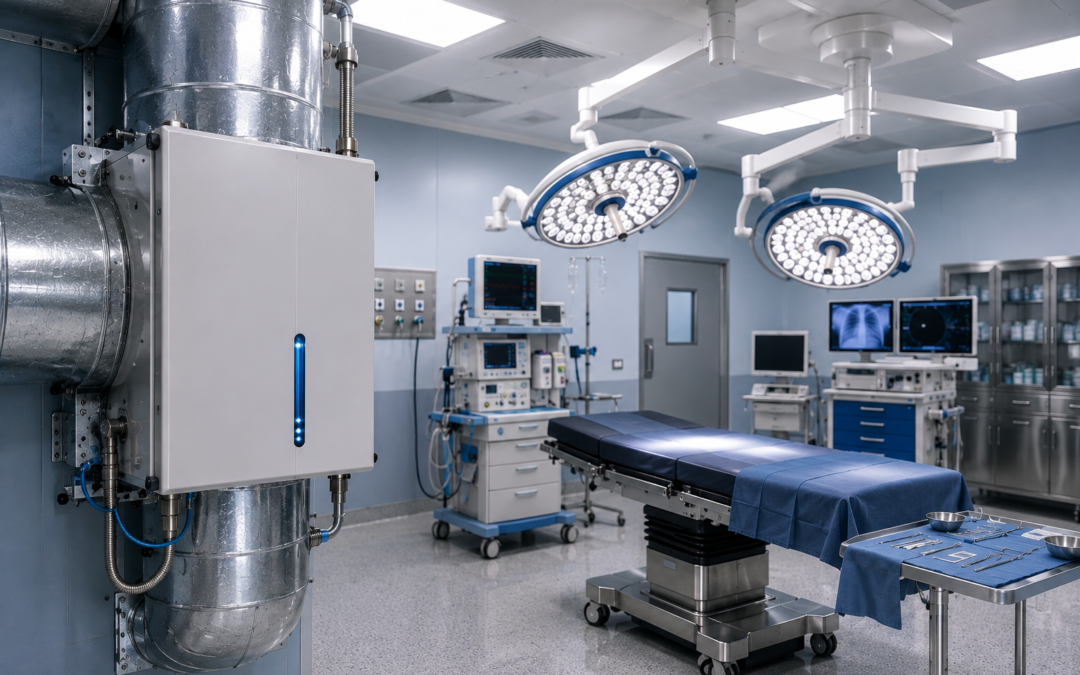
- Industrial steam systems perform effectively in cleanrooms and pharmaceutical facilities where sterile moisture addition supports contamination control protocols for cleanroom environments required by FDA and ISO standards.
How Steam Humidifiers Work
Steam humidification operates on the principle of phase change, converting liquid water into water vapor through thermal energy. The process begins when water enters a heating chamber containing either electric resistance elements or gas burners that raise the water temperature to 212 degrees F (100 degrees C) at standard atmospheric pressure. As water reaches its boiling point, it transforms into steam that carries no minerals, bacteria, or other contaminants from the source water.
The generated steam moves through distribution piping or ductwork under slight pressure created by the vaporization process. Steam injection points are positioned within air handling units or directly into spaces requiring humidity control, where the hot vapor mixes with ambient air and releases its latent heat energy. This heat transfer raises both the moisture content and temperature of the surrounding air, providing dual environmental conditioning.
Steam distribution systems incorporate temperature sensors and humidity controllers that modulate steam production based on space conditions. When relative humidity drops below setpoint, the heating elements or gas burners activate to generate additional steam until the desired humidity level is restored.
Electric vs Gas-Fired Steam Generation
Electric steam generators use resistance heating elements or electrode boilers to convert water into steam. Resistance systems heat water through metal elements similar to those in electric water heaters, while electrode units pass electric current directly through the water to generate heat. Electric systems require dedicated electrical circuits ranging from 30 to 480 amps depending on capacity, with voltage requirements of 208V, 240V, 480V, or 600V for industrial applications.
Gas-fired steam generators burn natural gas or propane to heat water in a combustion chamber. These systems require gas line connections sized for the burner’s BTU input rating, flue gas venting to atmosphere, and combustion air supply. Gas units typically operate at lower per-BTU costs than electric systems in regions where natural gas pricing is favorable, but require more complex installation and safety considerations.
Steam Distribution Methods
Ductwork integration places steam injection assemblies within air handling units or main supply ducts, allowing the HVAC system’s fans to distribute humidified air throughout the facility. This approach provides even moisture distribution but requires proper duct insulation to prevent condensation and may necessitate duct modifications to accommodate injection points.
Direct room injection uses individual steam dispensers located within spaces requiring humidity control. These units release steam directly into the room air and work independently of central HVAC systems. Room injection provides localized control but requires careful placement to prevent condensation on nearby surfaces and may create uneven humidity distribution in larger spaces.
Steam Humidifier Advantages
Steam humidification provides several distinct advantages that make it appropriate for specific industrial applications where sterile moisture addition and rapid response capabilities outweigh energy and installation considerations.
The heating process that creates steam eliminates biological contaminants, mineral deposits, and chemical impurities that may be present in source water. This sterile moisture delivery supports cleanroom protocols and pharmaceutical manufacturing requirements where contamination control is critical. Steam injection also produces no visible fog or droplets that could settle on sensitive equipment or products.
Steam systems respond quickly to humidity control demands because the steam generation process can be modulated rapidly through heating element or burner controls. Typical response times range from 15 to 30 minutes for significant humidity level changes, compared to slower response characteristics of some adiabatic systems that depend on evaporation rates.
Sterile Moisture Addition
The 212 degrees F temperature required for steam generation destroys bacteria, mold spores, and other microorganisms that may be present in the source water supply. This sterilization process makes steam humidification appropriate for cleanroom humidification applications where biological contamination could compromise product quality or regulatory compliance.
According to FDA guidance on sterile drug products, sterile manufacturing environments must control potential contamination sources, including moisture addition systems. Steam humidification addresses this requirement by delivering moisture that has been heated to temperatures that eliminate viable microorganisms.
High Capacity and Fast Response
Steam generators can produce substantial moisture output in compact equipment configurations. Industrial steam humidifiers range from 25 pounds per hour for smaller applications to over 1,000 pounds per hour for large facility requirements. This high capacity makes steam systems suitable for facilities with significant humidification loads or rapid humidity recovery needs.
The ability to modulate steam production through heating element staging or gas burner control provides responsive humidity management. When space humidity drops due to ventilation air, process loads, or building envelope leakage, steam systems can quickly increase moisture output to restore setpoint conditions within 15-30 minutes depending on space volume and air circulation.
Steam Humidifier Disadvantages and Limitations
Steam humidification presents significant operational challenges that facility managers must evaluate against the technology’s benefits. Energy consumption, installation complexity, and maintenance requirements often outweigh steam’s advantages in applications where sterile moisture addition is not specifically required.
The energy demands of converting water to steam through heating represent the technology’s primary limitation. Electric steam generators require 0.75 to 1.0 kW of electrical energy per pound of steam produced, translating to substantial operating costs for continuous industrial humidification. Gas-fired units reduce per-BTU costs but still consume significant thermal energy compared to adiabatic alternatives that use ambient air energy for evaporation.
Steam systems also introduce condensation management challenges that can affect building materials and equipment. When steam-laden air contacts cooler surfaces in ductwork, walls, or ceilings, condensation forms and may lead to moisture damage, mold growth, or corrosion issues if proper insulation and vapor barriers are not maintained.
Energy Consumption and Operating Costs
Electric steam humidification consumes approximately 970 BTU per pound of steam produced, equivalent to 0.284 kWh of electrical energy. For a facility requiring 100 pounds per hour of moisture output operating 16 hours daily, annual electricity consumption reaches approximately 166,000 kWh. At commercial electricity rates of $0.10 per kWh, this translates to $16,600 in annual energy costs for humidity control alone.
Gas-fired steam systems reduce energy costs in regions with favorable natural gas pricing, but still consume approximately 1,050 BTU per pound of steam when accounting for combustion efficiency losses. The energy intensity of steam generation makes it significantly more expensive to operate than adiabatic humidification technologies that achieve similar humidity control through water evaporation using ambient air energy.
Installation and Maintenance Requirements
Steam humidifier installation requires certified electricians for high-amperage electrical connections and licensed plumbers or gas technicians for gas line installation. Electric units drawing more than 30 amps require dedicated circuits with appropriately sized conductors, disconnect switches, and electrical panels capable of handling the additional load. Gas-fired systems need properly sized gas lines, combustion air supply, and flue gas venting that must comply with local mechanical codes.
Regular maintenance includes descaling heating elements every 3-6 months to remove mineral buildup that reduces efficiency and shortens component life. Steam generators require periodic water level sensor calibration, heating element inspection, and replacement of consumable components like electrodes in electrode-type systems. These maintenance demands require facility staff training or contracted service technicians, adding to total ownership costs.
Industrial Applications and Use Cases
Steam humidification performs effectively in industrial environments where sterile moisture addition addresses specific operational requirements. The technology’s advantages align with applications that prioritize contamination control, rapid humidity response, or regulatory compliance over energy efficiency and installation simplicity.
Cleanrooms and pharmaceutical manufacturing facilities represent the primary applications where steam’s sterile moisture delivery provides clear benefits. These environments require humidity control without introducing biological contaminants that could compromise product quality or violate FDA manufacturing guidelines. Steam systems support these requirements by delivering moisture that has been heated to temperatures that eliminate microorganisms.
Healthcare facilities and food processing operations also benefit from steam humidification in specific applications where rapid humidity response supports process requirements. The technology’s ability to quickly adjust moisture output helps maintain stable conditions during periods of variable ventilation loads or process demands.
Cleanrooms and Pharmaceutical Manufacturing
Pharmaceutical manufacturing humidification requires humidity control systems that do not introduce contaminants into sterile manufacturing environments. ISO 14644-1 cleanroom standards specify particle contamination limits that extend to moisture addition systems, making steam humidification appropriate for facilities where biological contamination poses product quality risks.
FDA Current Good Manufacturing Practice (cGMP) regulations require pharmaceutical manufacturers to control environmental conditions, including humidity, without introducing contamination sources. Steam humidification addresses this requirement by delivering moisture that has been sterilized through the heating process, eliminating bacteria and mold spores that may be present in source water supplies.
Healthcare and Food Processing Facilities
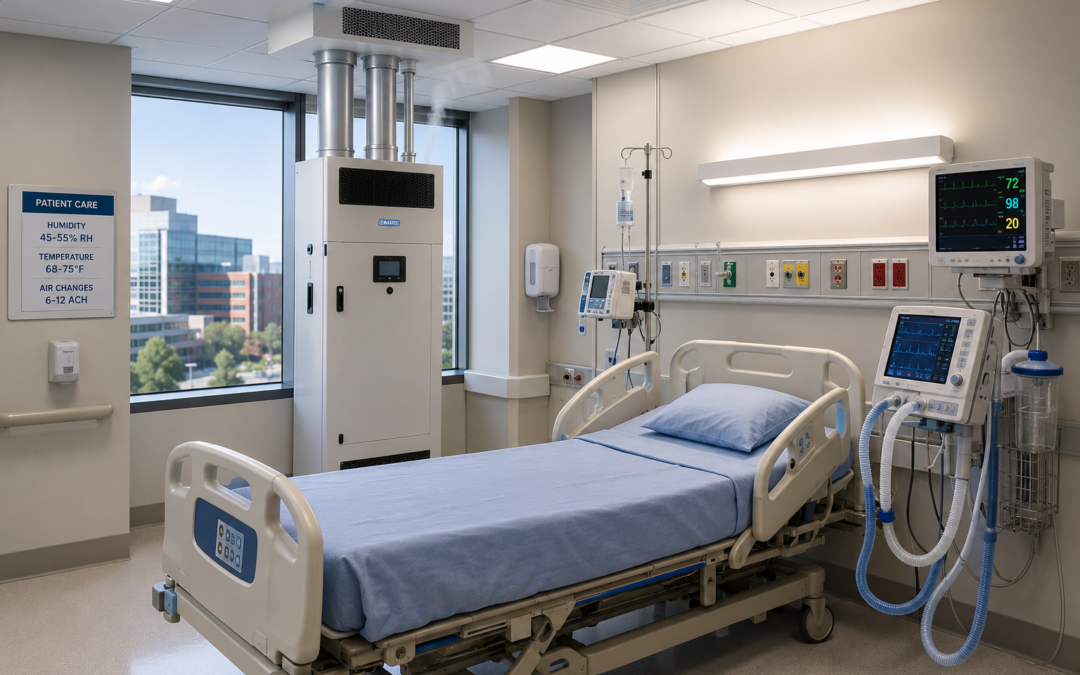
Healthcare facility humidification applications benefit from steam systems’ rapid response capabilities when maintaining specific humidity ranges for patient comfort or medical equipment operation. Operating rooms and patient care areas often require humidity levels between 45-60% relative humidity, with steam systems providing the responsiveness needed to maintain these conditions during variable occupancy and ventilation loads.
Food processing facilities use steam humidification in applications where rapid humidity adjustment supports product quality or process requirements. According to USDA food safety guidelines, certain food processing operations require specific environmental conditions, including humidity control that prevents product drying or maintains packaging integrity.
Smart Fog: Non-Wetting Precision Without Steam’s Complexity
Adiabatic humidification that produces an equal-sized droplet grid eliminates the surface-wetting risk that defines both steam condensation and traditional misting technologies while avoiding steam’s high energy consumption. Smart Fog systems use compressed air and water through a proprietary nozzle to create self-evaporating droplets that maintain precise humidity control up to 99% relative humidity with plus or minus 1-2% accuracy.
The compressed air and water mixing process requires no heating elements, gas burners, or high-amperage electrical connections that steam systems demand. This eliminates the energy consumption of 0.75-1.0 kW per pound of moisture output that makes steam humidification expensive to operate continuously in industrial facilities. Smart Fog systems operate on existing compressed air infrastructure and standard 110V electrical connections, simplifying installation without certified technician requirements.
Precision Humidity Without High Energy Consumption
Smart Fog systems achieve up to 99% relative humidity with plus or minus 1-2% precision using compressed air and water rather than energy-intensive heating. The equal-sized droplet grid self-evaporates before reaching surfaces under proper system design, providing precise moisture addition without the condensation risks that affect steam-humidified spaces when vapor contacts cooler surfaces.
The adiabatic process uses ambient air energy for evaporation, consuming only the electrical power needed to operate compressed air systems already present in most industrial facilities. This eliminates the substantial energy demands of converting water to steam through heating, reducing operating costs while maintaining the precision humidity control that industrial processes require.
Simple Installation and Long Service Intervals
Smart Fog systems require no certified technicians for installation and operate on existing compressed air infrastructure, eliminating the dedicated electrical circuits and gas line connections that steam systems require. The plug-and-play design connects to standard 110V electrical outlets and compressed air lines, allowing facility staff to complete installation without electrical or plumbing contractors.
Maintenance intervals extend to every two years with no moving parts in the humidification process, compared to steam systems that require descaling every 3-6 months and heating element inspection. The extended service intervals reduce facility burden and maintenance costs while providing continuous industrial operation in demanding environments where reliable humidity control systems support production requirements.
Final Thoughts on Steam Humidification
Steam humidification provides sterile moisture addition and rapid response capabilities that serve specific industrial applications where contamination control outweighs energy and installation considerations. The technology works effectively in cleanrooms, pharmaceutical facilities, and healthcare environments where regulatory requirements or process demands justify the higher operating costs and complex installation requirements.
For facilities evaluating commercial and industrial humidifiers, steam systems represent one option among several humidity control technologies. The decision depends on whether sterile moisture delivery addresses specific facility requirements that alternative technologies cannot meet through different operating principles.
Facility managers must weigh steam’s benefits against its substantial energy consumption, installation complexity, and maintenance demands when selecting humidity control systems for long-term industrial operation. The total cost of ownership often favors technologies that achieve comparable humidity control through more efficient operating principles.
For facilities seeking precision humidity control without steam’s operational complexity, request a system assessment to evaluate non-wetting humidification alternatives that deliver industrial performance with reduced energy consumption and maintenance demands.
Frequently Asked Questions
What is the difference between electric and gas-fired steam humidifiers?
Electric steam humidifiers use resistance heating elements or electrode systems to convert water into steam through electrical energy, requiring dedicated high-amperage circuits ranging from 30 to 480 amps. Gas-fired steam humidifiers burn natural gas or propane in combustion chambers to heat water, requiring gas line connections, flue gas venting, and combustion air supply. Gas systems typically offer lower per-BTU operating costs in regions with favorable natural gas pricing, while electric systems provide simpler installation without venting requirements.
How much energy do steam humidifiers consume compared to other humidification methods?
Electric steam humidifiers consume 0.75 to 1.0 kW per pound of moisture output, equivalent to approximately 970 BTU per pound of steam produced. This energy intensity makes steam significantly more expensive to operate than adiabatic humidification technologies that use ambient air energy for evaporation. A facility requiring 100 pounds per hour of moisture output can expect annual electricity costs of $15,000-20,000 for steam humidification, compared to substantially lower costs for adiabatic alternatives.
Do steam humidifiers require special installation or certified technicians?
Steam humidifiers require certified electricians for high-amperage electrical connections exceeding 30 amps and licensed gas technicians for gas line installation in gas-fired units. Electric systems need dedicated circuits with appropriately sized conductors and electrical panels capable of handling the additional load. Gas systems require proper gas line sizing, combustion air supply, and flue gas venting that must comply with local mechanical codes, extending installation timelines compared to plug-and-play alternatives.
What maintenance do steam humidifiers need and how often?
Steam humidifiers require descaling of heating elements every 3-6 months to remove mineral buildup that reduces efficiency and shortens component life. Regular maintenance includes water level sensor calibration, heating element inspection, and replacement of consumable components like electrodes in electrode-type systems. Gas-fired units also require combustion chamber cleaning and burner inspection. These maintenance demands require trained facility staff or contracted service technicians, adding to total ownership costs.
Can steam humidifiers cause condensation problems in ductwork?
Steam humidifiers can cause condensation when steam-laden air contacts cooler surfaces in poorly insulated ductwork, walls, or ceilings. Proper duct insulation and vapor barriers are essential to prevent moisture accumulation that can lead to mold growth, building material damage, or corrosion issues. Installation requires careful attention to ductwork temperature management and may necessitate duct modifications or insulation upgrades to prevent condensation problems.
Are steam humidifiers suitable for cleanroom applications?
Steam humidifiers work well in cleanroom applications because the heating process eliminates bacteria, mold spores, and other microorganisms from source water, delivering sterile moisture that supports contamination control protocols. The 212 degrees F temperature required for steam generation destroys viable microorganisms, making steam appropriate for pharmaceutical manufacturing and cleanroom environments where biological contamination could compromise product quality or regulatory compliance under FDA and ISO standards.
How quickly can steam humidifiers increase humidity levels?
Steam humidifiers can increase humidity levels within 15-30 minutes for significant changes, depending on space volume and air circulation. The rapid response comes from the ability to modulate steam production quickly through heating element staging or gas burner controls. This responsiveness makes steam systems suitable for applications requiring fast humidity recovery after ventilation air changes or process loads that remove moisture from the space.
What are the operating costs of running a steam humidifier continuously?
Operating costs for continuous steam humidification depend on energy prices and moisture output requirements. Electric systems consuming 0.75-1.0 kW per pound of steam output can cost $15,000-25,000 annually for facilities requiring 100 pounds per hour of moisture at commercial electricity rates of $0.10-0.15 per kWh. Gas-fired systems reduce costs in regions with favorable natural gas pricing but still represent substantial energy expenses compared to adiabatic alternatives that achieve similar humidity control through more efficient operating principles.