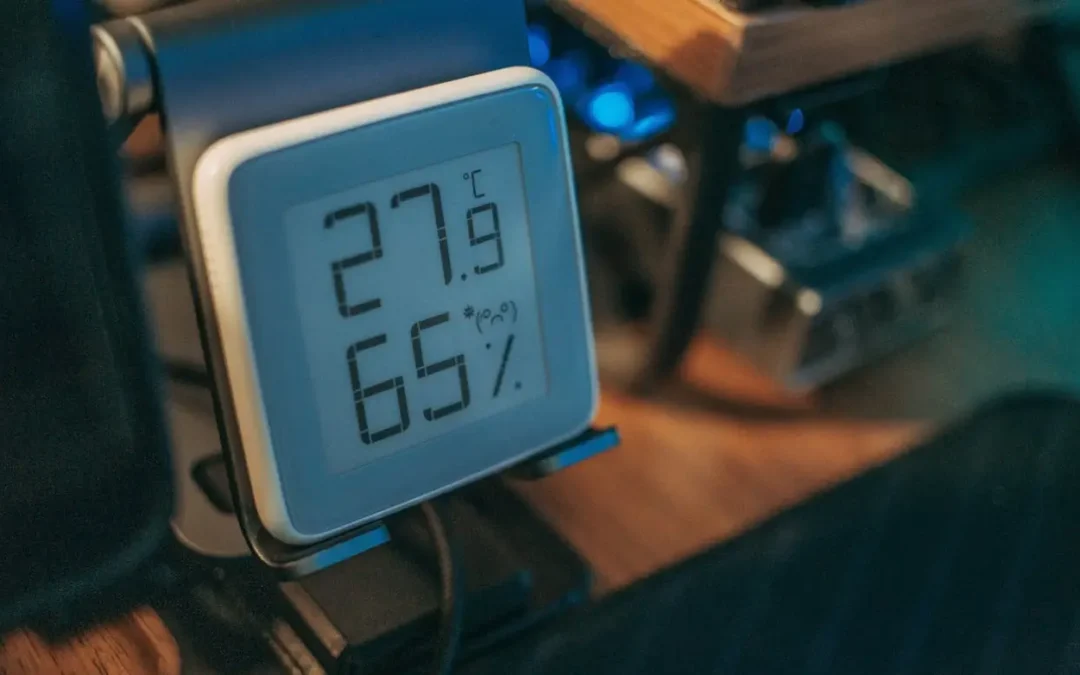
Water vapor in the air can be measured in more than one way, which is why humidity terms are often confused. Absolute humidity shows the actual mass of water vapor in the air, while relative humidity shows how close the air is to saturation at a given temperature.
These measurements matter in very different ways across HVAC, industrial settings, and everyday indoor comfort. This guide explains how absolute humidity, relative humidity, and specific humidity differ and where each one is used.
Key Takeaways
- Absolute humidity measures the actual mass of water vapor in air, usually in g/m³.
- Relative humidity shows how close the air is to saturation at a given temperature.
- The same air can keep the same absolute humidity while RH changes as temperature changes.
- Specific humidity measures water vapor by air mass and is mostly used in meteorology.
- Industrial facilities usually control relative humidity, not absolute humidity, because RH affects materials, condensation, and static risk.
What Is Absolute Humidity?
Absolute humidity measures the actual amount of water vapor present in a given volume of air. It is used when the goal is to quantify moisture directly rather than compare it to saturation.
Definition and Units, Grams per Cubic Metre
Absolute humidity is the mass of water vapor contained in a specific volume of air, usually expressed in grams per cubic metre, which is the basis of absolute humidity vs relative humidity comparisons in technical environments.
This measurement tells you how much water vapor is physically present in the air at that moment. Unlike relative humidity, it does not describe how full the air is relative to its maximum capacity.
How Absolute Humidity Is Calculated
Absolute humidity can be calculated from the mass of water vapor divided by the volume of air using the absolute humidity formula in g/m³. In technical applications, it may also be derived using vapor pressure and temperature relationships.
The formula matters less than the concept: it is a direct moisture measurement. That makes it useful in engineering and scientific contexts where the actual water content in air needs to be quantified.
Absolute Humidity vs Relative Humidity: The Core Difference
The core difference is simple: absolute humidity measures actual moisture, while relative humidity measures moisture relative to temperature-dependent capacity. That is why the two values can behave very differently in the same space.
Why Relative Humidity Changes with Temperature, Without Any Moisture Being Added
Relative humidity compares the amount of water vapor in the air to the maximum amount the air can hold at a given temperature. Because warm air can hold more moisture than cool air, the RH reading changes when temperature changes.
If air is heated without adding moisture, relative humidity drops. If that same air is cooled, relative humidity rises and may eventually reach saturation, which can lead to condensation.
Why Absolute Humidity Stays Constant When Temperature Changes
Absolute humidity stays the same when temperature changes only if no moisture is added or removed from the air. In that case, the total mass of water vapor in the measured air remains unchanged.
For example, if air contains 8 g/m³ of water vapor at 15°C and is then heated to 25°C without gaining or losing moisture, it still contains 8 g/m³. The moisture mass stays the same even though the relative humidity reading changes.
A Practical Example: The Same Air, Two Different Readings
A sealed room can hold the same amount of water vapor while still showing a different relative humidity reading as the temperature changes. That is the clearest way to see why absolute humidity and relative humidity are not interchangeable.
For example, if the air in a room contains the same moisture content throughout the day, its absolute humidity may remain unchanged. But as the room gets warmer, the air can hold more moisture, so the relative humidity drops even though no water vapor has been removed.
Here is a simple comparison:
What Is Specific Humidity?
Specific humidity is another way to measure moisture in the air, but it uses air mass instead of air volume. It is mostly used in meteorology, atmospheric science, and technical psychrometric work.
How Specific Humidity Differs from Absolute Humidity
Specific humidity measures the mass of water vapor compared with the total mass of moist air. It is usually expressed in grams per kilogram, written as g/kg.
That makes it different from absolute humidity, which measures the mass of water vapor within a fixed volume of air, usually in g/m³. In simple terms, absolute humidity is volume-based, while specific humidity is mass-based.
Here is a simple comparison:
- Absolute humidity: mass of water vapor in a given volume of air
- Specific humidity: mass of water vapor in a given mass of moist air
- Absolute humidity unit: g/m³
- Specific humidity unit: g/kg
- Absolute humidity basis: volume
- Specific humidity basis: mass
- Absolute humidity use: HVAC engineering, indoor air analysis, and technical moisture calculations
- Specific humidity use: meteorology, atmospheric science, and psychrometric analysis
Because it is tied to air mass rather than air volume, specific humidity is often more useful in atmospheric calculations. Most facility operators, however, are more likely to work with relative humidity in daily practice.
When Specific Humidity Is Used
Specific humidity is most commonly used in weather science, climate studies, and air-mass analysis. It helps describe how much moisture is present in the atmosphere in a way that is useful for large-scale environmental calculations.
It may also appear in technical charts, engineering references, or psychrometric discussions. Even so, it is not usually the main measurement used for everyday building humidity control or industrial setpoint management.
When Each Measurement Type Is Used
Each humidity measurement serves a different purpose, which is why these terms should not be treated as interchangeable. The right one depends on whether the goal is comfort control, engineering analysis, or atmospheric study.
Relative Humidity: Comfort, Compliance, and Industrial Control
Relative humidity is the most widely used measurement in buildings, controlled environments, and industrial facilities, aligned with ASHRAE humidity standards for facilities. It is used because it reflects the amount of moisture in the air in relation to temperature, and it is expressed as a percentage, which makes it practical for comfort targets, condensation control, static reduction, and material stability.
This is the value most often used for indoor air quality targets, HVAC settings, storage conditions, grow environments, cleanrooms, and regulated production spaces. In practical terms, RH is the reading people monitor when they need to maintain a stable environment, which reflects what relative humidity means for facilities and growers.
Absolute Humidity to Measure Absolute Humidity for HVAC Engineering and Energy Calculations
Absolute humidity is useful when the actual mass of water vapor in the air needs to be measured directly. That makes it valuable in engineering calculations, air-treatment analysis, and technical assessments where moisture load matters more than saturation percentage.
It can help support calculations involving drying, moisture removal, and the total water content moving through an air system. In these situations, the focus is on total moisture content and how dew point relates to humidity control.
Specific Humidity for Meteorology and Atmospheric Science
Specific humidity is mainly used in meteorology and atmospheric research. It is useful for tracking moisture in air masses because it expresses water vapor relative to total moist air mass rather than air volume.
That makes it well suited for weather modeling, climate analysis, and large-scale atmospheric calculations. It is important in technical science contexts, but much less common in daily facility humidity control.
Here is a quick summary:
- Relative humidity: measures moisture compared with saturation at a given temperature; common in HVAC control, indoor comfort, and industrial compliance.
- Absolute humidity: measures the actual mass of water vapor in a given air volume; common in engineering analysis and moisture load calculations.
- Specific humidity: measures water vapor mass relative to moist air mass; common in meteorology, climate science, and atmospheric analysis.
This distinction helps prevent confusion when reading technical documents, environmental reports, or equipment specifications. The measurement itself should always match the real-world purpose behind it.
Why Industrial Humidity Control Is Specified in Relative Humidity
Industrial environments are usually controlled in relative humidity terms because RH reflects how moisture behaves at a given temperature. That makes it more useful for controlling product quality, surface conditions, static risk, and compliance targets inside real facilities.
What Happens to RH Targets When Temperature Changes in a Facility
A facility can contain the same amount of water vapor in the air while still showing a different RH reading as the temperature shifts. That matters because materials, equipment, and processes respond to relative humidity, not just to the total moisture mass in the air.
When temperature rises, RH falls if no additional moisture is added. When temperature drops, RH rises and may move the space closer to saturation, which increases the risk of condensation on surfaces, products, or equipment. In controlled environments, even small temperature changes can push the room away from its intended target if the humidity control system does not respond quickly enough.
Here is a quick breakdown:
- Higher room temperature with the same moisture content usually lowers RH.
- Lower room temperature with the same moisture content usually raises RH.
- Rising RH can increase condensation risk on cooler surfaces.
- Falling RH can raise static risk and affect moisture-sensitive materials.
- Stable RH matters because process conditions depend on moisture behavior at the current temperature.
How Precision Humidity Control Systems Maintain Target RH
Because industrial processes are usually specified in RH terms, the humidity control system must maintain a stable RH target instead of simply adding a fixed amount of water vapor. That requires continuous sensing, controlled output, and consistent response as temperature and room conditions change.
In facilities where tight environmental control matters, the system has to react to real operating conditions in real time. That is why facilities often rely on industrial humidification systems designed for precise control, stable performance, and non-wetting operation. According to the brief, Smart Fog positions this around ±1–2% RH precision and 24/7 set-and-forget performance for demanding environments.
Here is why RH-based control matters in practice:
- It helps maintain product and material stability.
- It reduces the chance of condensation caused by shifting room conditions.
- It supports static control in sensitive environments.
- It helps facilities stay closer to compliance targets.
- It gives operators a more practical control value than absolute humidity alone.
Summary
Absolute humidity, relative humidity, and specific humidity all measure moisture differently, so they should not be treated as interchangeable. Absolute humidity measures the actual mass of water vapor in a given volume of air, relative humidity shows how close the air is to saturation at a given temperature, and specific humidity measures water vapor mass relative to moist air mass.
For homes and basic HVAC use, understanding absolute humidity helps explain changing RH readings. For manufacturing plants, cleanrooms, storage areas, grow facilities, and other controlled environments, precise RH control is what matters operationally. For facilities where precise humidity control is an operational requirement, explore Smart Fog’s humidification systems.
FAQ
What is the difference between absolute humidity and relative humidity?
The difference between absolute humidity and relative humidity is simple: absolute humidity measures the moisture content in the air by mass in a fixed volume, while relative humidity is expressed as a percentage and varies with temperature.
Why is absolute humidity important?
Absolute humidity is important in technical and industrial settings because it shows the actual amount of vapor present in the air. It helps engineers assess moisture load, drying conditions, and air treatment performance more directly than RH alone.
How does dew point relate to humidity?
Dew point shows the temperature at which air becomes saturated and condensation begins. It is linked to actual vapor pressure and the vapor pressure of water, so it helps explain when moisture in the air will turn from vapor into liquid.
Does absolute humidity change when air is heated?
Absolute humidity stays the same when air is heated only if no moisture is added or removed. In that case, the same vapor present in the air remains, but warmer air can hold more moisture, which often causes lower relative humidity.
What does absolute humidity measure?
Absolute humidity measures the mass of water vapor in a given volume of air. In simple terms, it helps express absolute humidity as the actual moisture load in air, instead of comparing it with saturation vapor or comfort-based RH readings.
What is the role of dry air in humidity measurements?
In humidity science, dry air is the air portion without water vapor. Comparing vapor pressure with the properties of dry air helps explain how moisture behaves, especially in psychrometric analysis, HVAC calculations, and atmospheric measurement work.
How do evaporation and humidity relate?
Evaporation adds moisture to the air, which increases the amount of vapor present in the air. As this happens, humidity rises until the air nears saturation vapor. Once moisture keeps building, condensation risk also rises as conditions shift.