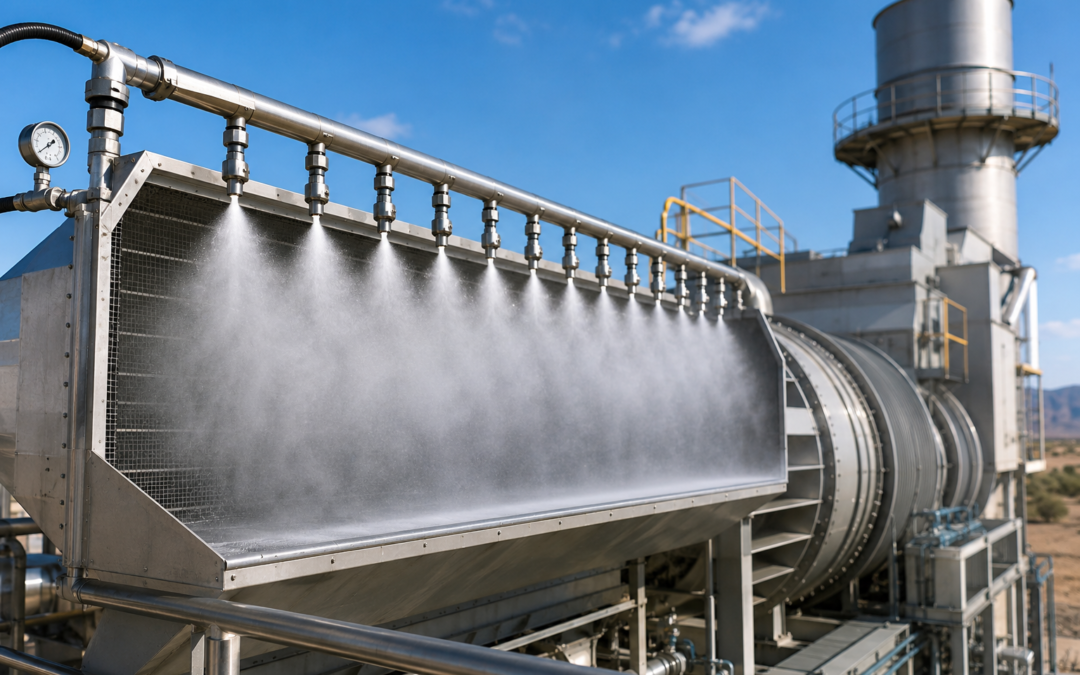
Gas turbine inlet fogging increases power output by cooling incoming air temperature before it enters the compressor. This evaporative cooling process reduces air density and improves mass flow through the turbine, delivering significant performance gains during peak...
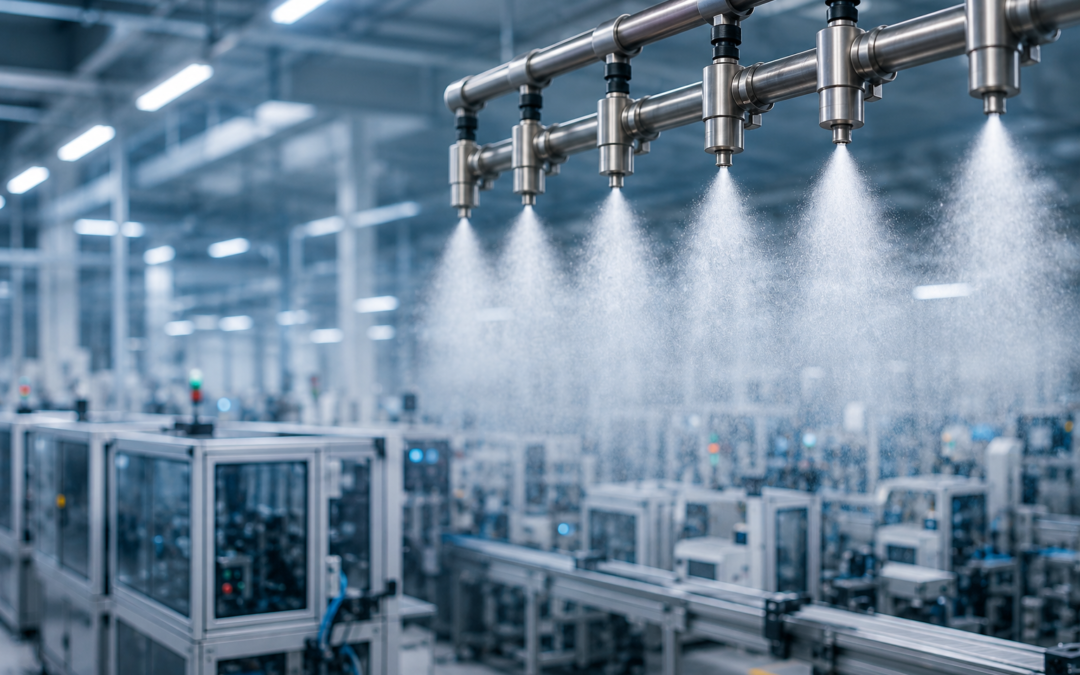
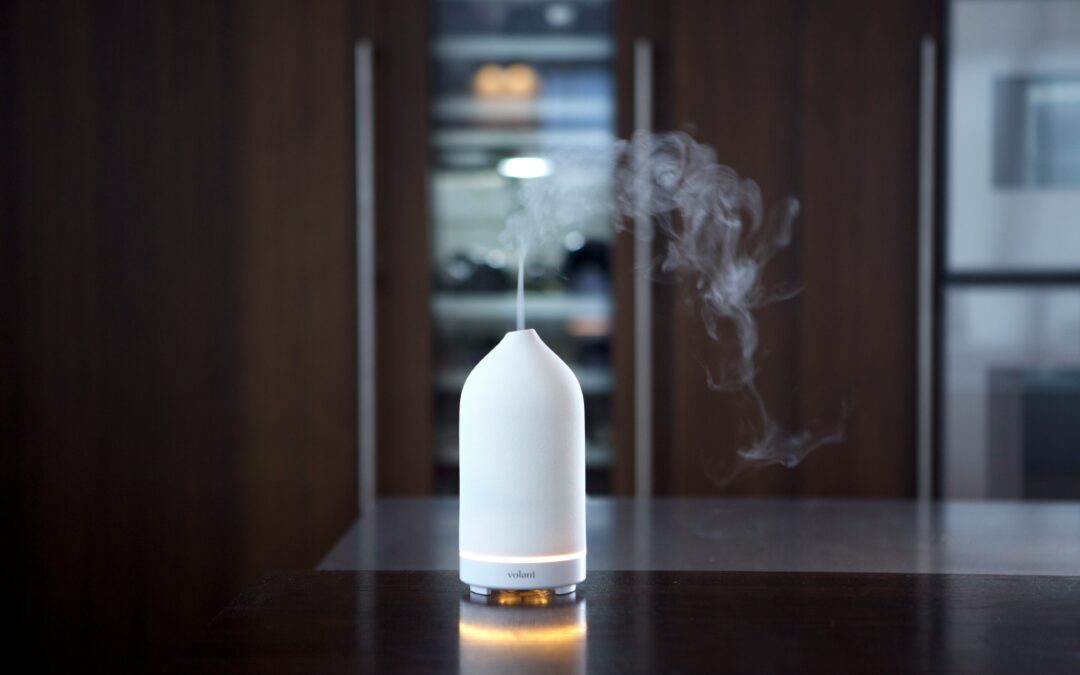
Industrial humidifiers add controlled moisture to air through various mechanisms including steam generation, evaporation, ultrasonic vibration, and precision droplet atomization. Manufacturing facilities, data centers, and commercial buildings require specific...
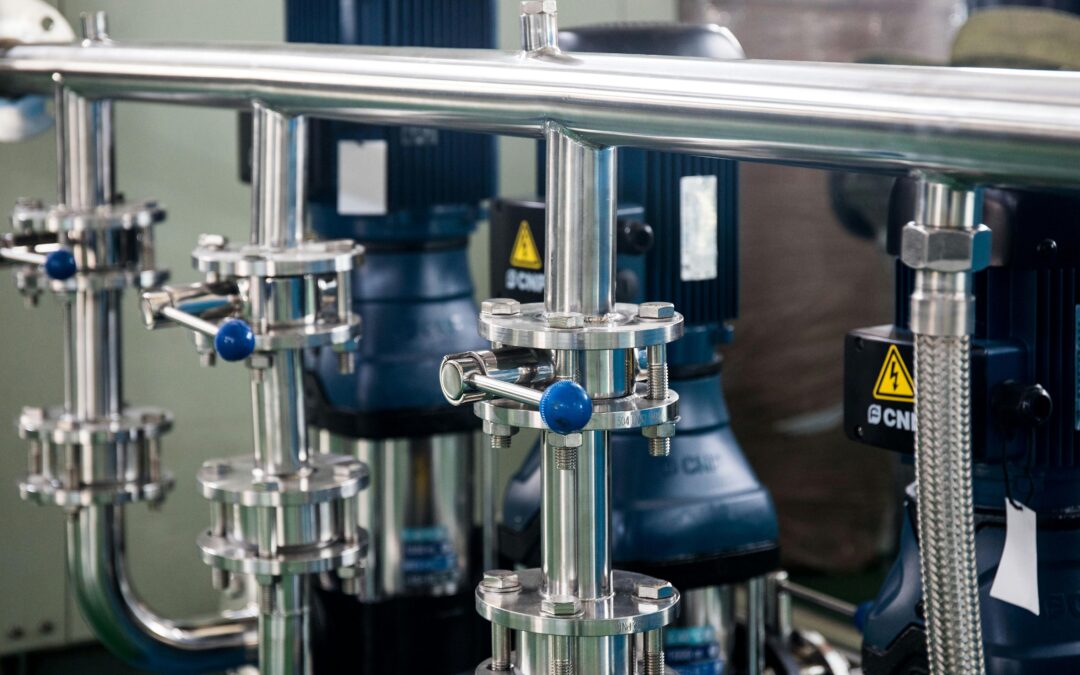
High pressure misting systems operate at 1000 PSI or higher to create fine water droplets that evaporate before reaching surfaces, providing cooling and humidity control for residential and commercial applications. These systems use specialized pumps, nozzles, and...
Air atomization uses compressed air and liquid mixing to create fine droplets through twin-fluid technology, offering distinct advantages over hydraulic high-pressure systems in droplet control, pressure requirements, and spray uniformity. This twin-fluid approach...
Dry fog humidifiers produce self-evaporating droplets that maintain precise humidity control without wetting surfaces or equipment. Unlike traditional misting systems that create condensation and surface moisture, dry fog technology uses compressed air and water...
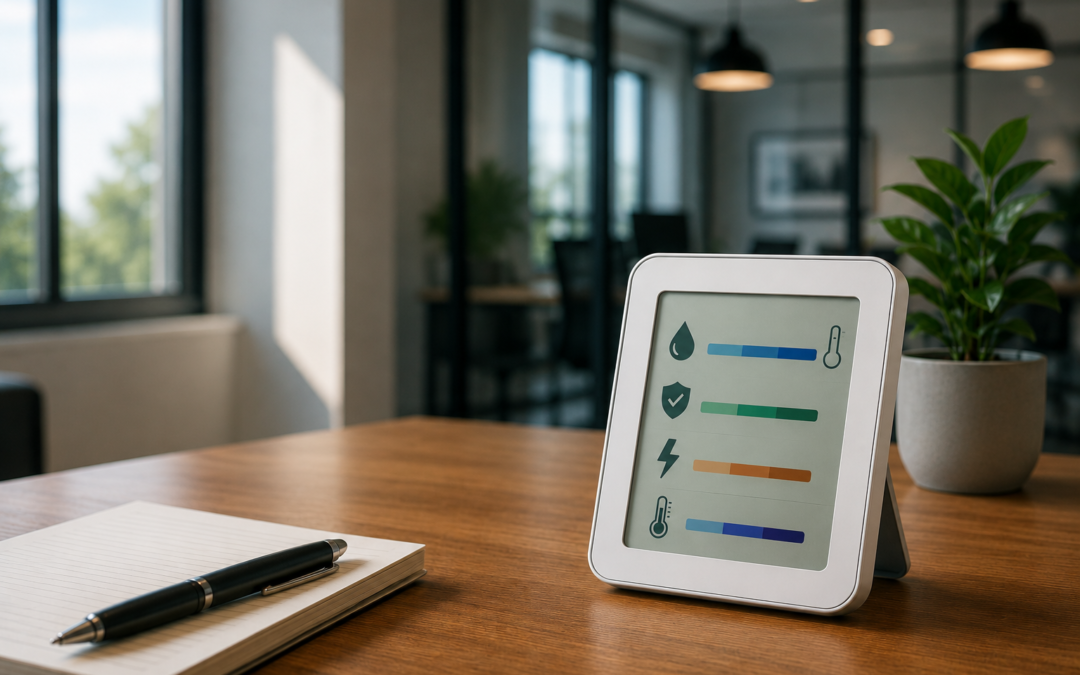
Automatic fogging systems use sensors, controllers, and automated valves to maintain precise humidity levels without manual intervention. These systems integrate humidity sensors with programmable controllers to continuously monitor ambient conditions and adjust fog...
A humidifier is a device that adds moisture to the air to increase humidity levels in indoor spaces. These systems serve applications ranging from residential comfort control to precision industrial processes requiring specific moisture levels for equipment...
Ambient humidity refers to the amount of moisture present in the surrounding air at a specific location and time. Unlike relative humidity measurements that express moisture as a percentage of air’s maximum capacity at a given temperature, ambient humidity...
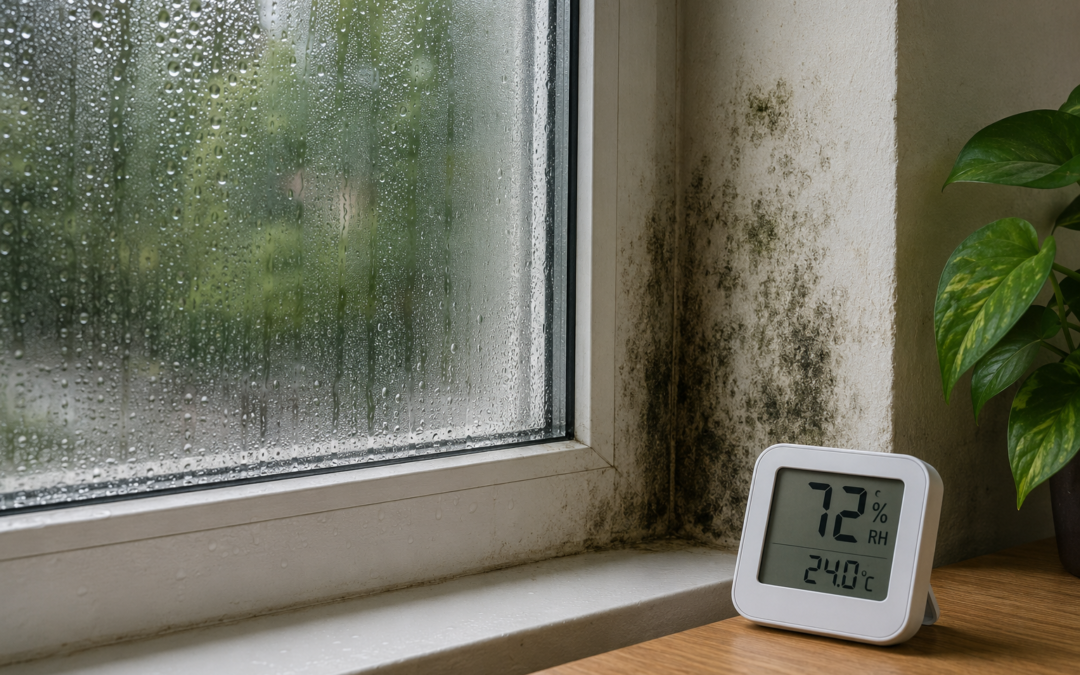
High humidity levels above 60% relative humidity (RH) create indoor air quality problems in most environments, though specific thresholds vary by facility type and application. Industrial and commercial facilities often require stricter control, with levels above...
Yes, Texas is humid, but humidity levels vary dramatically across the state’s diverse climate zones, ranging from desert-dry conditions below 30% relative humidity in West Texas to subtropical moisture exceeding 80% along the Gulf Coast. This variation spans...