

Just because the air inside your workplace looks clean doesn’t necessarily mean it is According to the U.S. Environmental Protection Agency (EPA), indoor air pollution is one of the top five environmental risks to public health. Breathing in this heavily polluted air day after day can take its toll on a person’s health, triggering allergies, respiratory infections, and a wide range of other conditions.
To put the problem into perspective, a report published by the EPA states that indoor air is roughly 1-5x more polluted than outdoor air. There are cases, however, in which indoor air is up to 100x more polluted than outdoor air. When an office or workplace has inadequate circulation, the air becomes trapped and stagnant. Rather than pollutants flushing out, they continue to build in the air, increasing the risk of adverse health complications to nearby workers.
Some of the most common indoor air pollutants include the following:
- Carbon monoxide
- Cigarette smoke
- Pollen
- Mold
- Carbon dioxide (high concentrations)
- Volatile organic compounds (VOC)
- Offgassing
- Pet dander
- Dust mites
- Bacteria
- Viruses
Thankfully, there are steps you can take to improve the quality of air in your workplace, one of which is to change the air filter on a regular basis. Assuming your workplace uses central heating and air, it should have at least one filter that’s used to catch pollutants and prevent them from flowing through the duct work. A good rule of thumb is to replace the air filter at least once per month for maximum protection against airborne pollutants.
Installing a humidifier can also improve indoor air quality. When the air is exceptionally dry, pollutants can travel with greater ease. This means workers and anyone else inside the office is more susceptible to its harmful effects. A humidifier will regulate the moisture vapor in the air, ensuring there’s an appropriate humidity level at all times. And with the humidity regulated, airborne moisture vapor will slow down pollutants so they are unable to travel as easily.
You might be surprised to learn that plants can be used to combat indoor air pollution. Plants serve two functions in this regard: they capture dust and other pollutants, and they also release fresh oxygen back into the atmosphere. Check out the list of the top air-purifying plants according to NASA.
Commercial Humidification Changing Your Environment for the Better
Unless it is a terribly hot and “muggy” day, we rarely stop to think about the amount of moisture in the air. However, the amount of moisture in our working and living environments can have a huge impact on our health. Too much moisture can cause mold and mildew to grow and spread, which can be especially dangerous for people with allergies or compromised respiratory systems. Too little moisture can lead to an uncomfortably dusty environment, and dry air that can also be irritating for those with lung or breathing issues.
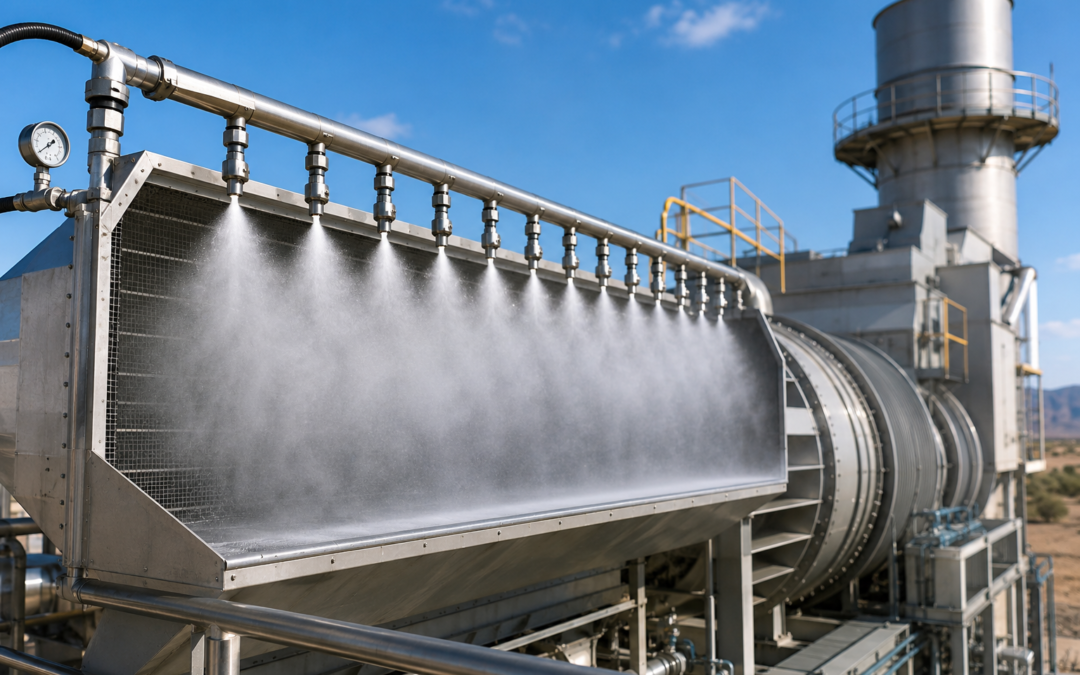
A non-wetting humidification system can aid in dust suppression in a dry environment, and create a moist environment without the risk of mold or mildew growth. Commercial humidification can provide this same level of air quality regulation in large public spaces and workplaces, such as the mall, the local movie theater, or your office. So take a moment to consider the quality of the air where you live or work. A change may be in order, and the installation of a humidification system can have a profoundly positive effect on the health and overall well-being of everyone around you.
Environmentally-Friendly Humidification Systems
Many companies are attempting to reduce their consumption of natural resources as well as power in order to be more environmentally-friendly. Modern humidification systems which can be purchased use close to half as much water and electricity as older technology, and thus it is worth replacing outdated humidifier technology if greener operations are desired. In addition to this aspect of more efficient humidifiers, the savings in water and electricity consumption also mean that utility bills for companies which use these systems will not be as high.